Pattern Detector
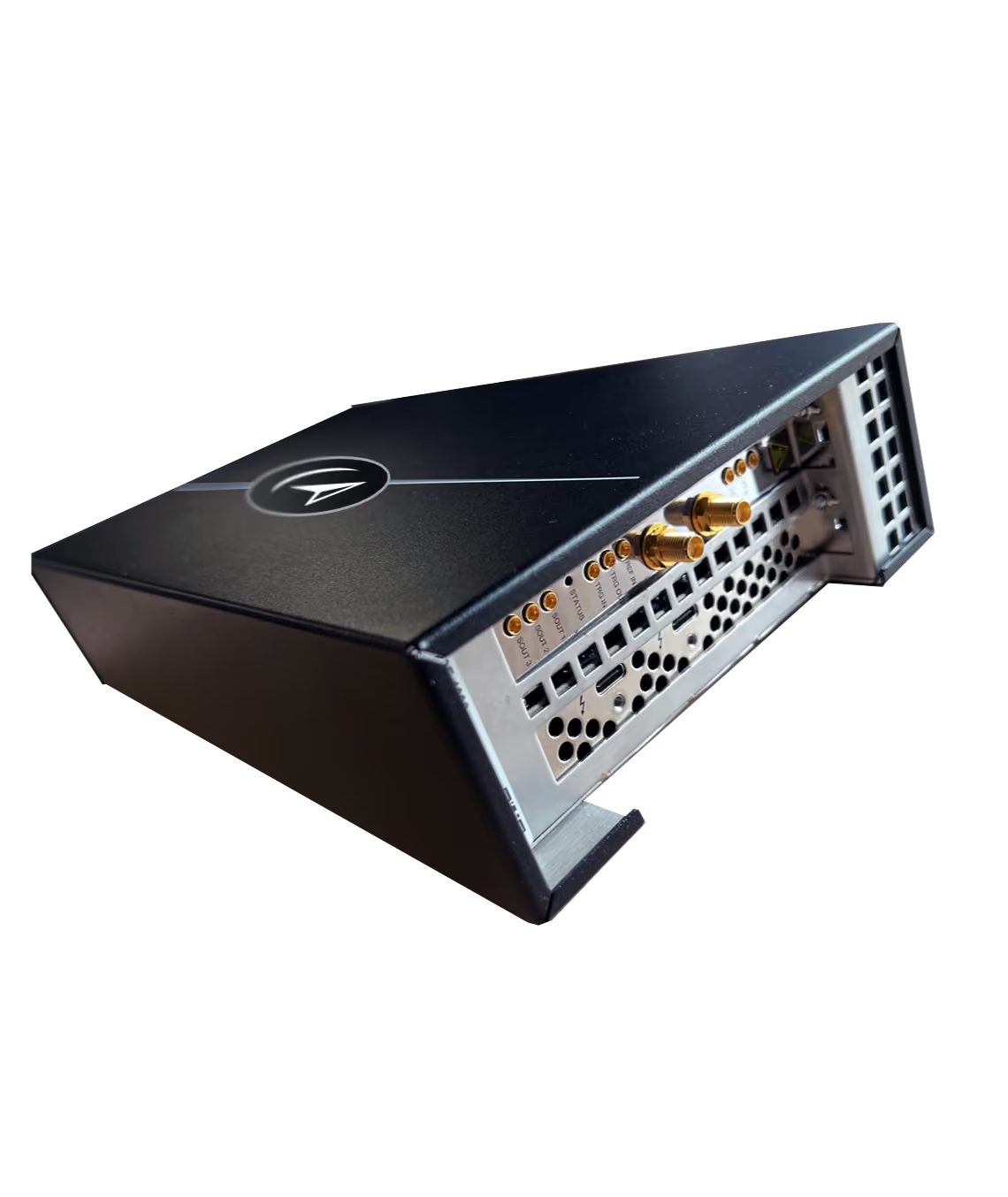
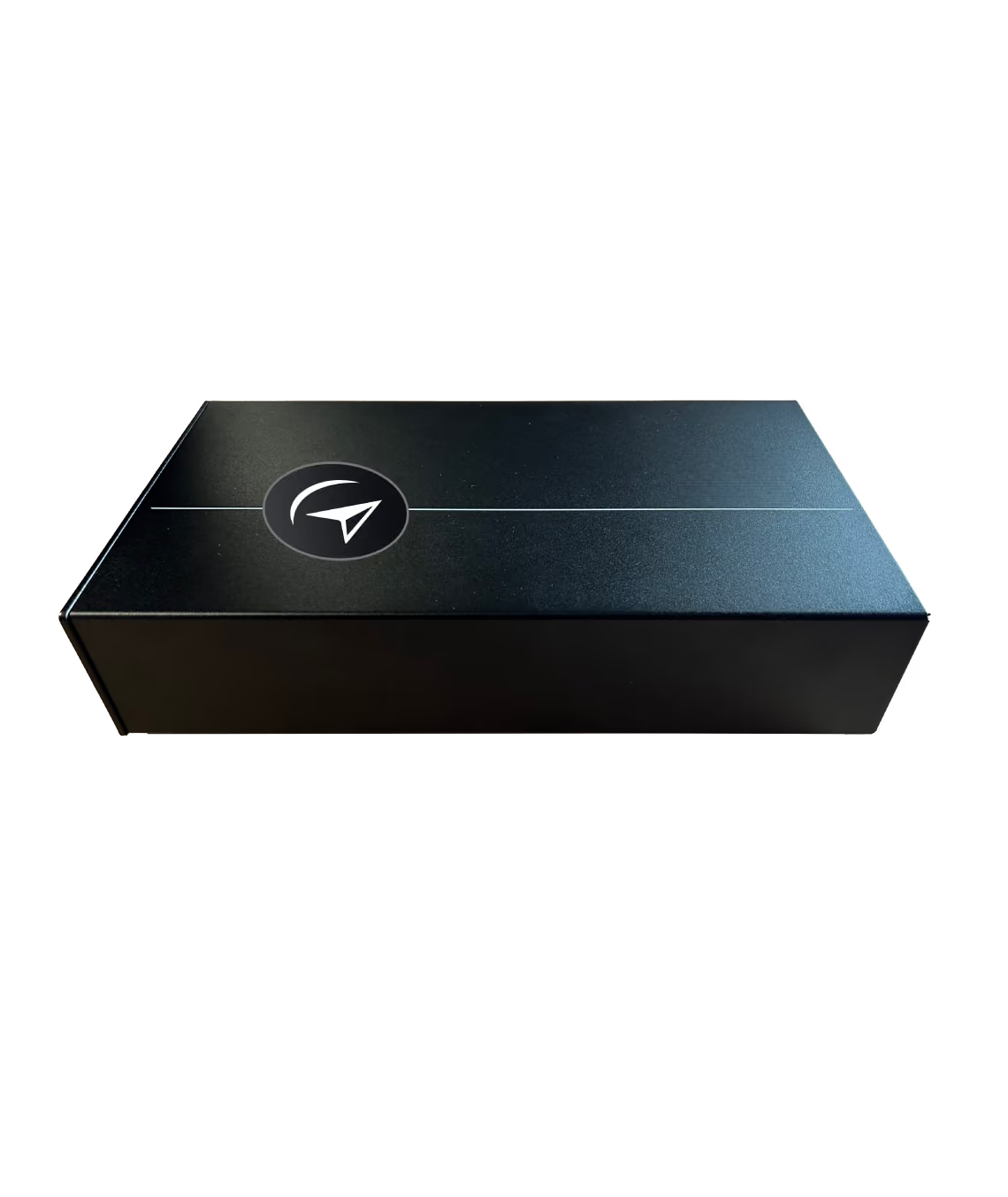
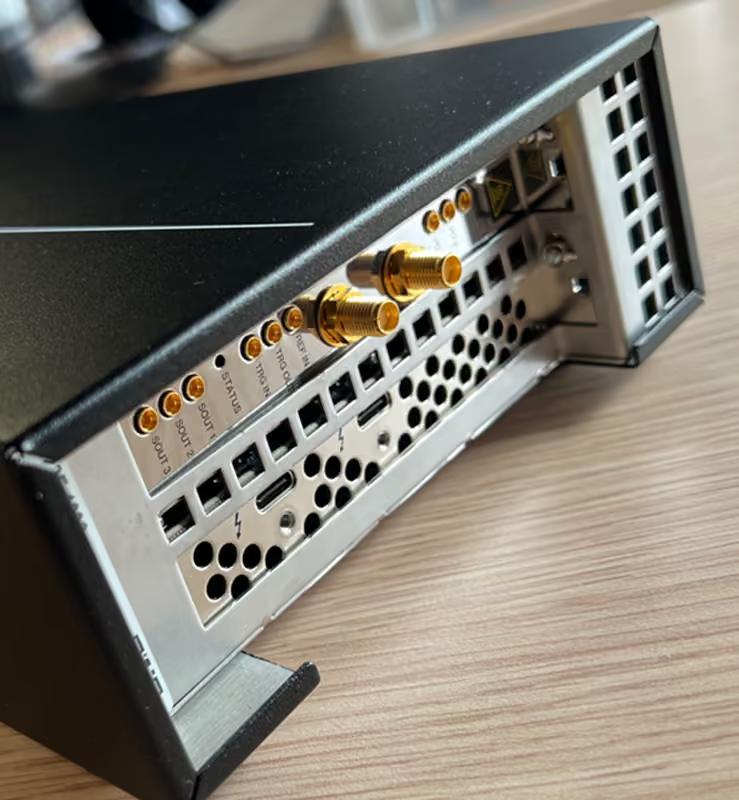
A hardware device that detects predefined patterns on power or EM signals up to 500 MHz and emits an accurate trigger in response, for more consistent acquisitions, precise fault timing, and countermeasure bypass.
Product Overview
.webp)
Designed specifically to remove the setup difficulties of working with smartcard targets in side-channel or fault injection testing.
XYZ motorised CNC stage lets you position EM probes around the DUT and accommodate different form factors.
1 µm XYZ resolution and ±5 µm XY repeatability let you return to the exact same point on the DUT across multiple injection attempts.
Integrates directly with esDynamic as a Python device for scripted configuration, control, and acquisition workflows.
Detects specific events on power or EM signals, ensuring more accurate and repeatable fault injection and side-channel acquisitions over time.
Precisely measures the power consumption of contact smartcard DUTs for side-channel analysis.
Integrates directly with esDynamic as a Python device for scripted configuration, control, and acquisition workflows.
Unlike manual Z-axis setups, every axis here is motorised, so the entire probe position can be driven by joystick or script without manual readjustment.
Up to 500 Mpts channel memory, with extensions offered by default to handle memory-demanding asymmetric and post-quantum cryptography workloads (removable upon request).
The RF3 set ships with a dedicated 30 dB pre-amplifier (PA 303); the ICR probe has its amplifier integrated directly into the housing, powered by a bias tee, for clean signal capture without extra setup.
Electrically shielded against electric field coupling, so what you measure is the magnetic field you're after, not stray interference.
The daughter board extension exposes both sides of the smartcard, simplifying probe positioning for EM acquisition or laser fault injection.
Magnetic legs hold the DUT firmly while you probe, with the design supporting access to both sides for more injection points.
Both probe types resolve magnetic fields at under 1 mm, letting you isolate leakage from individual components rather than picking up surrounding noise.
Lets you define exact on/off timings for the power cycle, fitting the needs of your test setup.
Designed for eShard EMFI probes, Langer EMA probes, and fixation for high-end Langer ICR probes.
Better resolutions or different bandwidths available on request, for specialized measurement needs.
Digital microscope with articulated camera holder for a zoomed, magnified view of the DUT.
The ICR probe includes adjustment screws for manual alignment of the probe tip, letting you fine-tune positioning precisely over the target.
Selected through practical experimentation on System-on-Chip devices, not generic specs, so you start with probes already validated against modern SoCs.
Two anti-bounce devices are included, one for each pulse polarity, so you're equipped for both without extra purchases.
Gamepad-based joystick for manual alignment or full programmatic control via esDynamic, delivering an XYZ resolution of 0.05 mm.
12-bit resolution captures the fine signal detail needed for side-channel leakage analysis.
eShard provides notebooks (or a PDF for non-esDynamic users) detailing each probe's characteristics, so you know exactly what you're working with.
Comes with a probe holder and SMA/SMA connectors, so the kit is usable out of the box.
The included anti-bounce devices filter out signal reflections in the EM pulse, giving you sharper, more controllable, and more repeatable fault injection.
4 GHz bandwidth and up to 20 GS/s sampling rate, suitable for SoC and FPGA targets.
The dual pulse version adds a second, independently delayed pulse (1 ns to 1 μs after the first), for attacks that require two coordinated fault events.
500 ps rise time and delay adjustment steps down to 100 ps let you dial in on the exact threshold where fault effects start, without overshooting into device damage.
Up to 3000 V peak voltage at 50 Ω load.
Detects the execution of fault injection countermeasures, such as kill cards, and triggers a response (e.g. powering off the DUT) before the countermeasure takes full effect.
Internal and external triggers, single-pulse command, and finely tunable delay are integrated into the generator, so most setups don't need a separate trigger controller.
Manages the DUT power source through USB and/or jack ports.
Integrates directly with esDynamic as a Python device for scripted configuration, control, and acquisition workflows.
Real-time pattern detection up to 500 MHz with <3.1 ns 1 ns trigger-out jitter, for tightly synchronized acquisitions and pulses.
Integrates directly with esDynamic as a Python device for scripted configuration, control, and acquisition workflows.
eShard provides matched cables and an attenuator, so connecting the generator to other equipment, like your oscilloscope, doesn't risk damaging it.
Power-cycles the DUT automatically when it crashes, keeping fault injection campaigns running without manual intervention.
Technical Specifications
Built by experts, not vendors.
With over 10 years running physical attacks against real targets, our hands-on experience shapes every device we qualify for our catalog, the same hardware we put to work on our own attacks before it ever reaches you.
Frequently Asked Questions
Lorem ipsum dolor sit amet